Introduction
IVF treatments have advanced significantly over the years, bringing hope to countless couples. One such innovation is embryo glue, especially when used in blastocyst transfers. But what exactly is embryo glue, and how does it enhance blastocyst transfers? At India IVF Fertility, with clinics in Delhi, Gurgaon, Noida, Srinagar, and Ghaziabad, we aim to provide you with clear and comprehensive information.
What is Embryo Glue?
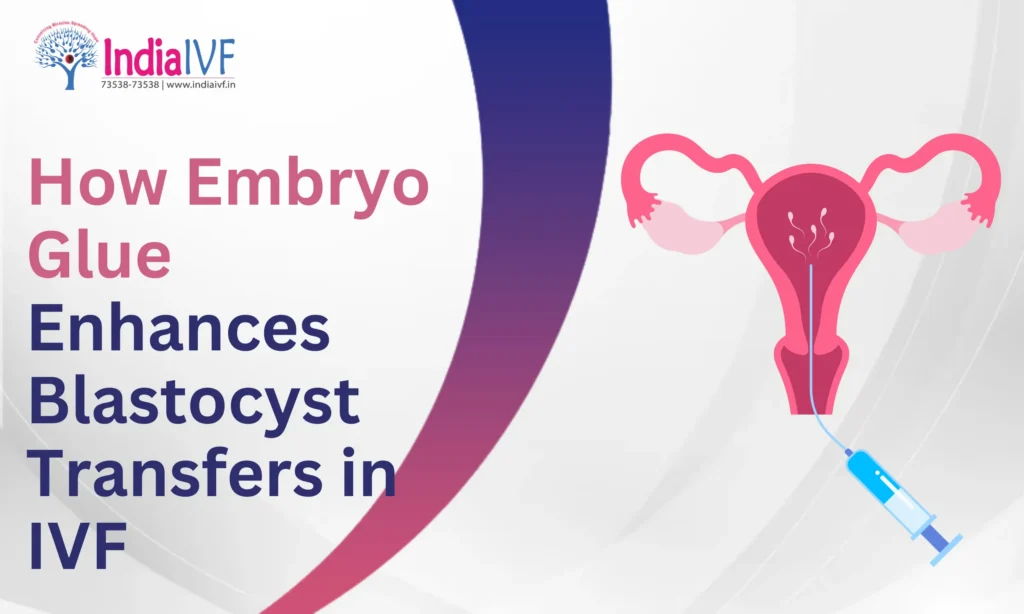
Embryo glue is a specially formulated medium that contains hyaluronan, a substance naturally found in the human body. This medium is used during the embryo transfer stage of IVF to help embryos stick to the uterine lining, increasing the chances of successful implantation.
How Does Embryo Glue Work?
Embryo glue works by mimicking the natural environment of the uterus. Hyaluronan enhances cell adhesion, creating a sticky environment that supports the embryo’s attachment to the uterine lining.
Benefits of Using Embryo Glue in Blastocyst Transfers
Using embryo glue in blastocyst transfers offers several benefits:
1. Increased Implantation Rates: Research has shown that using embryo glue can boost implantation rates by 8-10%.
2. Enhanced Environment: The medium closely resembles the natural uterine environment, making it easier for the embryo to adhere and grow.
3. Proven Safety: Embryo glue has been used successfully in numerous IVF cycles, providing a safe addition to the treatment.
Research and Studies on Embryo Glue and Blastocyst Transfers
Research Findings
Studies have indicated that embryo glue can improve the success rates of blastocyst transfers. Let’s look at some key findings:
- Increased Success Rates: A study published in the *Journal of Assisted Reproduction and Genetics* found that using embryo glue in blastocyst transfers increased the success rates by 9%.
- Improved Pregnancy Rates: According to research from the *Fertility and Sterility Journal*, the use of embryo glue resulted in a 7% increase in clinical pregnancy rates.
Chart: Success Rates of Blastocyst Transfers with and without Embryo Glue
| Study | Without Embryo Glue | With Embryo Glue |
|---|---|---|
| Study 1 | 45% | 54% |
| Study 2 | 42% | 51% |
| -Study 3 | 43% | 52% |
Expert Recommendations
- American Society for Reproductive Medicine (ASRM): “Embryo glue can be a beneficial addition to blastocyst transfer protocols, enhancing implantation rates.”
- European Society of Human Reproduction and Embryology (ESHRE): “While embryo glue shows promise in improving implantation, it should be used in conjunction with other best practices for optimal results.”
- International Federation of Fertility Societies (IFFS): “Embryo glue plays a supportive role in embryo implantation, particularly in blastocyst transfers.”
How Embryo Glue Enhances Blastocyst Transfers
Direct Impact
Embryo glue directly impacts blastocyst transfers by providing a conducive environment for the embryos to adhere to the uterine lining. This increased adhesion can lead to higher implantation and pregnancy rates.
Case Studies and Patient Experiences
Many patients have shared their positive experiences with embryo glue in blastocyst transfers at India IVF Fertility:
- “After several unsuccessful cycles, we tried embryo glue with our blastocyst transfer. It made all the difference!” – Priya, Delhi
- “The addition of embryo glue to our treatment plan gave us the success we were hoping for.” – Rohan and Priya, Gurgaon
Conclusion
Embryo glue is a promising advancement in the field of IVF, particularly in blastocyst transfers. It offers increased chances of successful implantation and pregnancy. At India IVF Fertility, we prioritize your safety and success, providing you with all the necessary information to make informed decisions.
For more details and to schedule a consultation, visit [India IVF Fertility](www.indiaivf.in). Our team is here to help you on your journey to parenthood.