Introduction
When we talk about overall wellness, the butterfly-shaped gland in your neck plays a starring role. Thyroid in women is a topic of immense importance because this small gland regulates almost every metabolic process in the female body. From how fast your heart beats to how quickly you burn calories, the thyroid is the master controller. However, for many women, this gland doesn’t always function perfectly.
If you have been feeling constantly exhausted or are struggling to conceive, the culprit might be your endocrine health. Understanding the role of the thyroid in women is the first step toward reclaiming your energy and reproductive health. In this blog, we will dive deep into how thyroid hormones affect your daily life, the symptoms of imbalance, and why monitoring your TSH levels is vital for your future.
What is the Thyroid Gland?
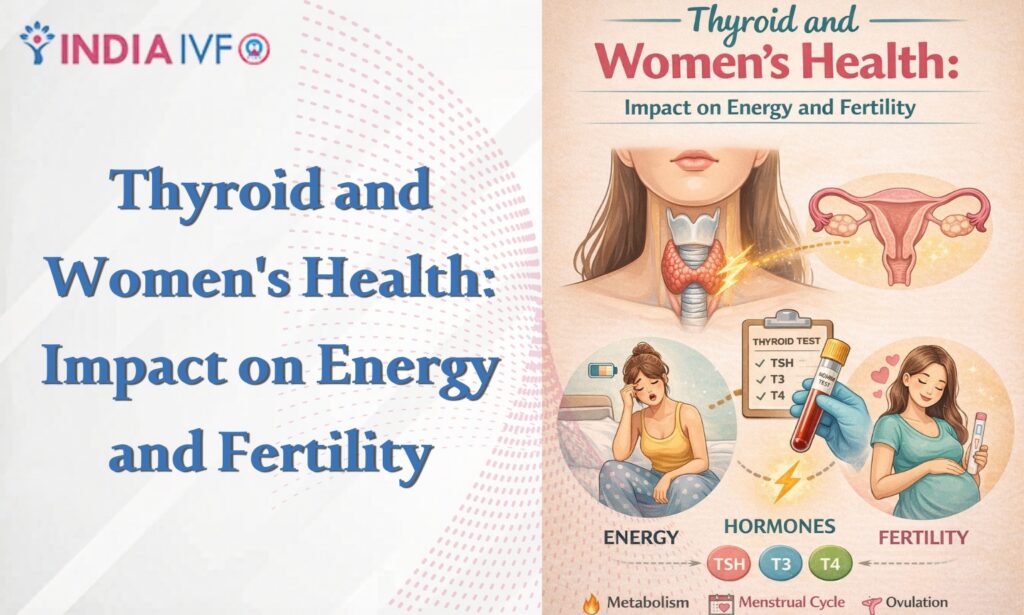
Before we discuss the issues, let’s understand the organ. The thyroid is part of the endocrine system. It produces hormones—primarily T3 (Triiodothyronine) and T4 (Thyroxine). These hormones act as chemical messengers, telling your cells how much energy to use.
Because of biological and hormonal differences, issues related to the thyroid in women are nearly eight times more common than in men. Whether it is puberty, pregnancy, or menopause, the female body undergoes various transitions where the thyroid plays a critical role.
Hypothyroidism: The Common Energy Stealer
One of the most frequent conditions involving the thyroid in women is hypothyroidism. This occurs when the gland is underactive and does not produce enough hormones.
Common Hypothyroidism Symptoms
If your thyroid is sluggish, your body’s processes slow down. You might experience:
- Chronic Fatigue: Feeling tired even after 8 hours of sleep.
- Unexplained Weight Gain: Finding it hard to lose weight despite dieting.
- Cold Sensitivity: Feeling cold when everyone else is comfortable.
- Thinning Hair and Dry Skin: Your external beauty often reflects your internal endocrine health.
- Brain Fog: Difficulty concentrating or remembering things.
- Muscle Aches: General stiffness and joint pain.
When the thyroid in women slows down, the impact on energy is immediate. You aren’t just “lazy”; your cells literally lack the “fuel” needed to function at peak capacity.
The Science of TSH Levels
To understand if your thyroid is working correctly, doctors check your TSH levels. TSH stands for Thyroid Stimulating Hormone. It is produced by the pituitary gland to tell the thyroid to get to work.
- High TSH: Usually indicates an underactive thyroid (Hypothyroidism). Your brain is screaming at your thyroid to produce more hormones.
- Low TSH: Usually indicates an overactive thyroid (Hyperthyroidism). Your brain has stopped signaling because there is already too much hormone in the blood.
For women, maintaining optimal TSH levels is not just about feeling energetic; it is the foundation of hormonal balance.
Thyroid in Women: The Connection to Fertility
One of the most sensitive areas affected by the thyroid in women is the reproductive system. Many women struggle with infertility for years without realizing that their thyroid is the underlying cause.
How Thyroid Affects Conception
The thyroid gland interacts closely with female sex hormones like estrogen and progesterone. If the thyroid is imbalanced, it can lead to:
- Anovulation: This is when your body does not release an egg during your menstrual cycle.
- Luteal Phase Defects: Even if you conceive, a thyroid issue can make it difficult for the fertilized egg to implant in the uterus.
- Irregular Periods: Heavy periods or missed cycles are common signs of poor endocrine health.
If you are planning a family, testing the thyroid in women should be your top priority.
Related Blog Links: प्रेगनेंसी में थायरॉयड कितना बड़ा बाधक?
Thyroid and Pregnancy: A Delicate Balance
The journey doesn’t end at conception. The relationship between the thyroid and pregnancy is vital for the health of both the mother and the baby.
During the first trimester, the baby depends entirely on the mother’s thyroid hormones for brain and nervous system development. If a woman has undiagnosed hypothyroidism during this stage, it can lead to:
- Preeclampsia (High blood pressure during pregnancy).
- Risk of miscarriage.
- Premature birth.
- Low birth weight.
Monitoring the thyroid in women during every trimester ensures that the baby receives the necessary hormones for healthy growth.
Endocrine Health and Lifestyle
Your endocrine health is not just about genetics; it is also about how you live. To support the thyroid in women, one must look at:
- Nutrition: Iodine, Selenium, and Zinc are the “big three” minerals for thyroid health.
- Stress Management: High cortisol levels (stress hormone) can inhibit thyroid hormone production.
- Sleep: Deep sleep is when your endocrine system repairs itself.
Cost of Thyroid Testing and Services
Early detection is the best way to manage the thyroid in women. Below is a general cost breakdown for common thyroid-related tests and consultations.
| Service / Test Type | Description | Estimated Cost (INR) |
| TSH Test | Measures only the Stimulating Hormone. | ₹1,410 – ₹2,820 |
| Thyroid Profile (Total) | Measures T3, T4, and TSH. | ₹3,800 – ₹6,600 |
| Thyroid Antibody Test | To check for autoimmune issues (Hashimoto’s). | ₹5,600 – ₹9,400 |
| Endocrinologist Consultation | Specialist doctor fee for endocrine health. | ₹4,700 – ₹14,100 |
| Thyroid Ultrasound | Imaging to check for nodules or swelling. | ₹7,500 – ₹18,800 |
Risk and Utility: Why You Should Care
The Risks of Neglect
Ignoring the symptoms of the thyroid in women can lead to long-term health complications:
- Heart Problems: An underactive thyroid can increase “bad” cholesterol, leading to heart disease.
- Mental Health: There is a strong link between hypothyroidism and clinical depression.
- Myxedema: A rare but life-threatening condition caused by long-term untreated hypothyroidism.
The Utility of Treatment
On the flip side, the utility of managing your thyroid is life-changing:
- Increased Vitality: Proper medication can restore your energy levels within weeks.
- Successful Pregnancy: Proper management of the thyroid and pregnancy leads to healthy babies and safe deliveries.
- Weight Management: Balancing your hormones makes it easier for your metabolism to function correctly.
Testimonials: Real Stories of Recovery
Sarah’s Story: “I spent three years thinking my exhaustion was just because I was a working mom. When I finally got my TSH levels checked, I found out I had severe hypothyroidism. Within a month of treatment, I felt like a new person. My brain fog lifted, and I finally had the energy to play with my kids.”
Priya’s Story: “We struggled with infertility for two years. Our doctor suggested checking my endocrine health. It turned out my thyroid was slightly off. Once we regulated my thyroid in women protocol, I conceived within four months. I am now a proud mother of a healthy baby boy.”
Conclusion:
The health of the thyroid in women is the foundation of a vibrant, fertile, and energetic life. Don’t dismiss your fatigue or reproductive struggles as “normal” or “stress-related.” Your body might be sending you a signal that its master controller needs help.
Take Charge of Your Health Today!
If you’re experiencing hypothyroidism symptoms or planning a pregnancy, don’t wait. Book a comprehensive Thyroid Profile test today and consult with an expert in endocrine health.
Know More: Click Here to Book Your Fertility Consultation Today