For many couples, fertility treatment starts with one simple question: “Doctor, can we try IUI first?”
And honestly, that is a very natural question.
IUI is less invasive than IVF. It costs less. It does not feel as heavy emotionally or physically. For the right couple, at the right age, with the right sperm report and proper ovulation timing, IUI can be a good first-line fertility treatment.
But there is one thing every couple should understand clearly: IUI success rate is not the same for everyone.
Some couples have a good chance with IUI. Some may waste precious time if they keep repeating IUI when IVF would be more suitable. That is why knowing the real IUI success rate in India matters.
This guide explains IUI pregnancy chances in simple language, just like a fertility doctor would explain during consultation.
What is IUI Fertility Treatment?
IUI, or Intrauterine Insemination, is a fertility treatment where processed and concentrated sperm are placed directly inside the woman’s uterus around the time of ovulation.
Normally, sperm travel from the vagina through the cervix, then into the uterus and fallopian tubes. In IUI, the doctor helps the sperm reach closer to the egg by placing good-quality motile sperm directly into the uterus.
This does not mean fertilisation happens in the lab. Fertilisation still happens naturally inside the body, usually in the fallopian tube.
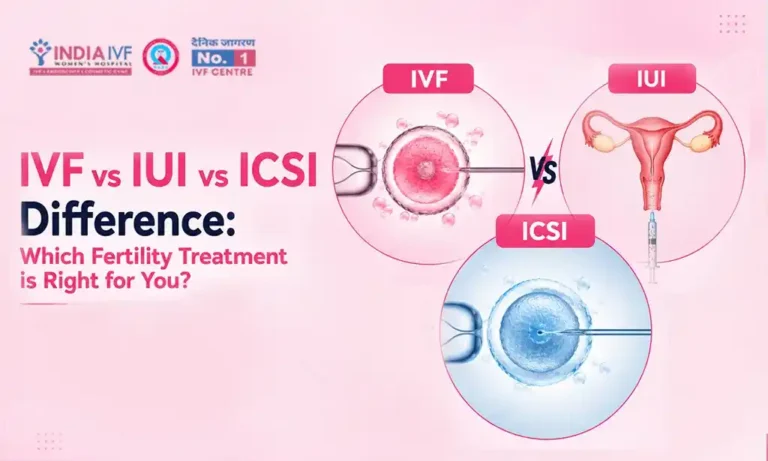
That is the main difference between IUI and IVF.
In IUI, sperm and egg meet inside the body.
In IVF, egg and sperm are fertilised outside the body in an embryology lab.
The American Society for Reproductive Medicine explains that IUI success depends on fertility medicines, age of the female partner, infertility diagnosis, and other couple-specific factors.
How Does IUI Work?
The IUI cycle is usually simple and quick.
First, the woman’s ovulation is tracked. This can be done naturally or with medicines that help one or more eggs grow. Ultrasound monitoring helps the doctor see follicle growth. Sometimes, a trigger injection is given to time ovulation properly.
On the day of IUI, the semen sample is collected and processed in the lab. This process removes seminal fluid and selects healthier, motile sperm. Then the doctor places the prepared sperm into the uterus using a thin, soft catheter.
The actual IUI procedure usually takes only a few minutes. Most women feel mild discomfort, similar to a Pap smear or routine gynaecological procedure.
After that, the hardest part begins — the two-week wait.
IUI Success Rate in India: What is Realistic?
The average IUI success rate in India is usually around 10% to 20% per cycle in well-selected couples. In some cases, it may be lower. In a few ideal cases, it may be slightly higher.
But the most honest answer is this:
IUI success depends more on the couple’s fertility factors than the clinic alone.
A 29-year-old woman with open fallopian tubes, regular ovulation, and a good sperm sample may have a much better chance than a 40-year-old woman with low AMH, poor egg reserve, or blocked tubes.
This is why no ethical fertility doctor should promise a fixed IUI success percentage to every couple.
IUI Success Rate by Age
Age is one of the strongest factors affecting IUI pregnancy chances. As female age increases, egg quality and egg number both decline. This directly affects fertilisation, embryo quality, implantation, and miscarriage risk.
| Female Age | Approximate IUI Success Rate Per Cycle |
| Under 35 years | 10% to 20% |
| 35 to 37 years | 8% to 15% |
| 38 to 40 years | 5% to 10% |
| Above 40 years | Usually less than 5% |
These numbers are broad estimates. They can change depending on sperm count, ovulation, fallopian tube status, AMH, endometriosis, PCOS, and previous pregnancy history.
Research consistently shows that advancing female age reduces IUI outcomes. Studies on sperm parameters also show that pregnancy rates in early IUI cycles are closely linked with sperm motility and total motile sperm count.
First Time IUI Success Rate
Many couples ask, “Can IUI work in the first attempt?”
Yes, it can. But the first time IUI success rate is usually modest. In most good-prognosis couples, it may be around 10% to 15% in the first cycle.
That may sound low, but fertility treatment is not always about one cycle. Many couples conceive in the second or third IUI cycle.
A practical approach is usually to try 3 well-planned IUI cycles if the couple is suitable for IUI. A review on IUI practice found that at least three consecutive IUI cycles should be performed in couples with an indication for IUI, although there is insufficient evidence to recommend one fixed maximum number for everyone.
But if the woman’s age is higher, AMH is low, tubes are damaged, or sperm count is very poor, waiting for many IUI cycles may not be wise.
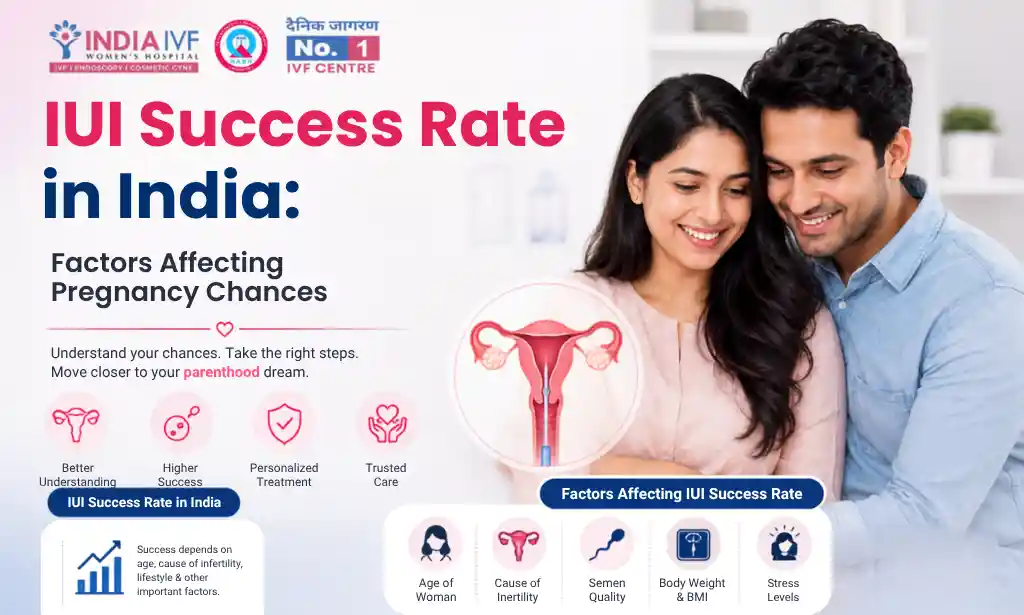
Factors Affecting IUI Success Rate
IUI is a simple procedure, but success depends on many small things coming together.
1. Female Age
This is the biggest factor. Younger women usually have better egg quality. Better egg quality improves the chance of fertilisation and implantation.
After 35, IUI success starts declining. After 38, doctors usually become more cautious. After 40, IVF may be discussed earlier, especially if ovarian reserve is low.
2. Fallopian Tube Health
At least one fallopian tube should be open for IUI to work.
Why?
Because sperm is placed in the uterus, but fertilisation usually happens in the fallopian tube. If both tubes are blocked, sperm and egg cannot meet. In such cases, IUI will not help, and IVF is usually required.
3. Sperm Count and Motility
IUI needs a reasonable number of moving sperm.
A classic study found that IUI was effective for male factor infertility when initial sperm motility was at least 30% and total motile sperm count was at least 5 million; when values were lower, the chance of success became poor.
This is why semen analysis is not just a formality. It helps decide whether IUI is suitable or whether IVF/ICSI may give better chances.
4. Ovulation Timing
Timing is everything in IUI.
If IUI is done too early, the egg may not be released. If it is done too late, the egg may no longer be viable. That is why ultrasound monitoring and trigger injection timing are important.
A well-timed IUI is much better than a casually planned IUI.
5. Ovarian Stimulation
In some women, fertility medicines are used to grow follicles. This can improve chances in selected cases. But more follicles also mean a higher chance of twins or multiple pregnancy.
ASRM notes that clomiphene citrate with IUI is superior to expectant management and natural-cycle IUI for live birth in unexplained infertility, but multiple pregnancy risk varies across studies.
So, ovarian stimulation should be controlled. The aim is not to make too many eggs. The aim is to make the cycle safer and more effective.
6. Cause of Infertility
IUI works better in some cases than others.
IUI may be useful in:
| Condition | IUI Suitability |
| Unexplained infertility | Often suitable initially |
| Mild male factor infertility | May be suitable if motile sperm count is adequate |
| Ovulation problems | May help with ovulation induction |
| Cervical mucus issues | Can be useful |
| Sexual dysfunction or difficulty with intercourse | Can be helpful |
| Donor sperm treatment | Often used |
IUI is usually not ideal in:
| Condition | Why IUI May Not Help |
| Both tubes blocked | Sperm and egg cannot meet |
| Severe male infertility | Too few motile sperm |
| Very low AMH with advanced age | Time-sensitive situation |
| Severe endometriosis | Lower natural fertilisation chance |
| Multiple failed IUIs | IVF may be better |
| Long infertility duration | Success may be lower |
IUI Success Symptoms: Can You Feel Pregnancy After IUI?
This is one of the most searched topics after IUI.
After IUI, many women start noticing every small body change. A little cramp. Mild breast pain. Sleepiness. Slight spotting. Mood changes. Food smell sensitivity.
But here is the truth: there are no special IUI success symptoms.
Many symptoms after IUI happen because of progesterone, trigger injection, anxiety, or normal hormonal changes after ovulation.
Possible early pregnancy-like symptoms may include:
| Symptom | What It May Mean |
| Mild cramping | Can happen after IUI or during implantation |
| Light spotting | May be procedure-related or implantation-related |
| Breast tenderness | Often due to progesterone |
| Fatigue | Can happen in both PMS and pregnancy |
| Nausea | Not reliable so early |
| Mood swings | Hormonal changes |
| Frequent urination | Usually later, not very early |
So, do not judge IUI success by symptoms.
The only reliable way to confirm pregnancy is a beta-hCG blood test, usually done around 14 days after IUI.
How Many IUI Cycles Should You Try Before IVF?
There is no single answer for everyone.
For a young woman with good ovarian reserve, open tubes, and mild infertility, trying 3 cycles of IUI may be reasonable.
But for a woman aged 38 or above, or a couple with severe male factor infertility, repeated IUI may only delay the right treatment.
Cochrane evidence on unexplained infertility shows that treatment effects can vary between couples, and in poor-prognosis couples, ovarian stimulation with IUI and IVF/ICSI may improve live birth compared with expectant management, though this should be interpreted carefully.
A practical rule is:
Try IUI only if your doctor feels your fertility profile is suitable.
Move to IVF earlier if age, sperm count, tubes, AMH, or previous failures suggest lower IUI chances.
IUI vs IVF: Which is Better?
This is not about which treatment is “better.” It is about which treatment is better for your case.
| Point | IUI | IVF |
| Fertilisation | Inside body | In lab |
| Cost | Lower | Higher |
| Procedure intensity | Mild | More advanced |
| Success rate | Lower per cycle | Higher per cycle |
| Best for | Mild cases | Tubal block, severe male factor, low reserve, failed IUI |
| Embryo information | Not available | Embryo development can be assessed |
IUI is a good option when the problem is mild and time is on your side. IVF is better when the fertility problem is more serious or when time is very important.
Risks of IUI Treatment
IUI is generally safe and minimally invasive. But like any medical treatment, it has some risks.
1. Mild Cramping or Spotting
Some women feel mild cramps after the procedure. A little spotting can happen because the catheter passes through the cervix.
2. Infection
Infection after IUI is rare, but possible.
3. Multiple Pregnancy
This is the main risk when fertility medicines are used. If two or three follicles grow, there is a chance of twins or triplets.
This may sound exciting to some couples, but multiple pregnancy carries higher risks for mother and babies. That is why monitoring is important.
4. Cycle Cancellation
Sometimes, if too many follicles grow, the doctor may cancel the cycle to avoid unsafe multiple pregnancy. This can feel disappointing, but it is done for safety.
Tips to Improve IUI Pregnancy Chances
No lifestyle tip can guarantee pregnancy. But good preparation can support egg quality, sperm health, and hormonal balance.
1. Do Not Skip Basic Fertility Tests
Before IUI, make sure you have the right evaluation. This usually includes ultrasound, ovulation assessment, semen analysis, ovarian reserve testing, and tube testing.
2. Time the Procedure Properly
IUI should be planned around ovulation. Proper ultrasound monitoring and trigger timing can improve the chance of sperm and egg meeting at the right time.
3. Improve Sperm Health
Male partner should avoid smoking, excessive alcohol, heat exposure, poor sleep, and crash dieting. Sperm health may improve with lifestyle correction, but it usually takes around 2 to 3 months for meaningful changes.
4. Maintain Healthy Weight
Both obesity and being underweight can affect hormones and ovulation. A healthy weight supports better fertility outcomes.
5. Avoid Self-Medication
Do not take fertility tablets without monitoring. Unmonitored ovulation induction can increase the risk of cysts or multiple pregnancy.
6. Stay Calm During the Two-Week Wait
This is easier said than done. But do not keep testing too early. It can create unnecessary stress and confusion.
7. Know When to Stop IUI
Repeating IUI endlessly is not a strategy. If IUI is not working after a few well-planned cycles, ask your doctor whether IVF treatment is now a better option.
IUI Cost in India
IUI cost in India varies from city to city and clinic to clinic. It also depends on whether the cycle is natural or medicine-supported.
| Cost Component | What It Includes |
| Consultation | Fertility specialist visit |
| Ultrasound monitoring | Follicle tracking |
| Medicines | Ovulation medicines or trigger injection |
| Semen preparation | Sperm washing and concentration |
| IUI procedure | Insemination |
| Pregnancy test | Beta-hCG blood test |
IUI is usually much more affordable than IVF. But if multiple IUI cycles fail, the total cost, time, and emotional burden can increase. That is why choosing the right treatment early is important.
When Should You Book an IUI Consultation?
You should meet a fertility specialist if:
| Situation | Why Consultation Helps |
| Trying for 12 months without pregnancy | Basic fertility work-up is needed |
| Age above 35 and trying for 6 months | Do not delay evaluation |
| Irregular periods | Ovulation may be affected |
| Mild sperm issue | IUI may help in selected cases |
| Unexplained infertility | IUI may be considered |
| Previous failed IUI cycles | Need reassessment |
| Known tube problem | IVF may be needed instead |
Infertility affects about one in six people of reproductive age globally, according to WHO. Early evaluation helps couples avoid unnecessary delay and choose the right treatment at the right time.
Why Choose India IVF Clinic for IUI Treatment?
At India IVF Clinic, IUI is not done as a routine shortcut. It is planned only after understanding the couple’s complete fertility profile.
Our fertility team focuses on:
| What We Check | Why It Matters |
| Female age and ovarian reserve | To estimate realistic pregnancy chances |
| Fallopian tube status | IUI needs at least one open tube |
| Semen analysis | To check if sperm quality is suitable |
| Ovulation pattern | To time IUI correctly |
| Previous treatment history | To avoid repeating failed approaches |
| Emotional readiness | To guide couples with clarity |
The goal is simple: choose IUI when IUI is sensible, and move to IVF when IVF is the better path.
That honest decision saves time, money, and emotional energy.
Conclusion
IUI is a simple, safe, and affordable fertility treatment for many couples. But it is not magic, and it is not suitable for everyone.
The IUI success rate in India is usually best in younger women, with open fallopian tubes, good ovulation, and adequate sperm count and motility. Age, sperm quality, timing, ovarian reserve, and the cause of infertility all affect the final result.
So, instead of asking only, “How successful is IUI?”, ask a better question:
“Is IUI the right treatment for our case?”
That answer can only come after proper fertility evaluation.
If you are planning IUI, book a consultation with India IVF Clinic. Our specialists will review your reports and guide you with a personalised plan to improve your IUI pregnancy chances.
Call 73538-73538 to book your fertility consultation.
Reference:
- American Society for Reproductive Medicine — Intrauterine Insemination Patient Fact Sheet. (Reproductive Facts)
- ASRM Practice Committee — Evidence-based treatments for couples with unexplained infertility, 2020. (asrm.org)
- Cochrane — Interventions for unexplained infertility. (Cochrane)
- NICE Guideline NG257 — Fertility problems: assessment and treatment, 2026. (NICE)
- Cohlen et al. — IUI review and systematic assessment of evidence. (eshre.eu)
- Dickey et al. — Sperm quality necessary for successful IUI. (ScienceDirect)
- WHO — Infertility Fact Sheet. (World Health Organization)