Introduction
Welcome to India IVF Fertility, your trusted partner in making parenthood dreams come true. If you’re considering IVF treatment, you might have some concerns, including whether IVF can cause cancer. This blog will address these concerns, providing you with clear, evidence-based information to help you make informed decisions. Let’s dive in and clear up the myths and facts surrounding IVF and cancer risk.
Understanding IVF and Cancer Risk
Before we delve into the details, it’s essential to understand what IVF entails and how it might relate to cancer risk.
What is IVF?
In-Vitro Fertilization (IVF) is a process where an egg is fertilized by sperm outside the body, in a lab. The fertilized egg (embryo) is then transferred to the uterus with the hope of achieving pregnancy.
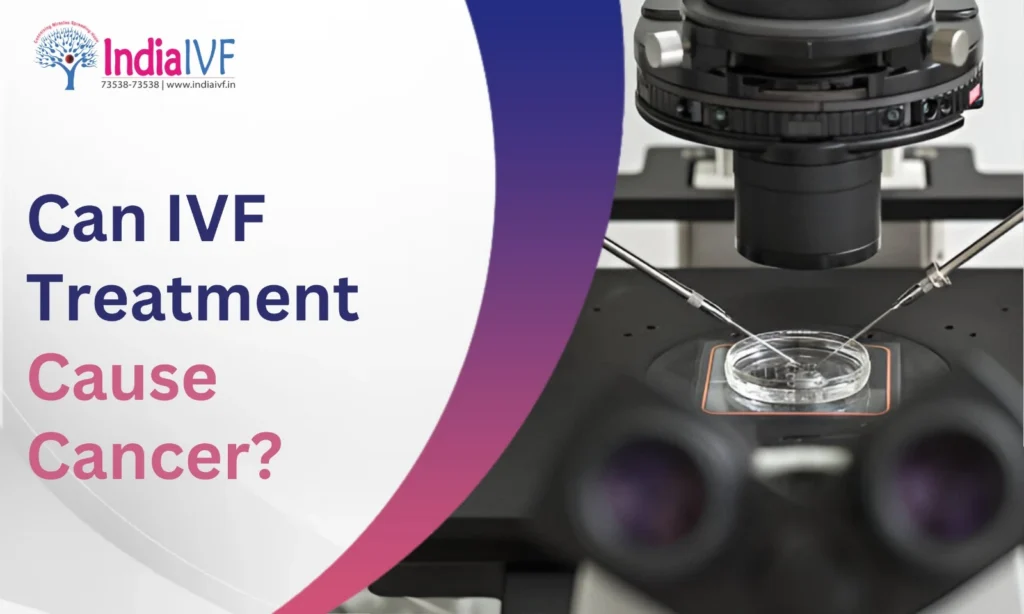
Can IVF Treatment Cause Cancer?
The simple answer is: Current research does not show a significant link between IVF treatment and an increased risk of cancer. However, it’s crucial to understand the nuances.
Studies and Research
Several studies have investigated the potential connection between IVF treatment and cancer. The findings have been largely reassuring, showing no significant increase in the risk of most cancers, including breast and ovarian cancer. However, some studies suggest a slight increase in the risk of borderline ovarian tumors, which are typically less aggressive than other forms of ovarian cancer.
Why Do Concerns About IVF and Cancer Arise?
Concerns about IVF and cancer stem from the hormonal treatments involved in the IVF process. Let’s break down these concerns:
1. Hormonal Stimulation: IVF requires the use of hormones to stimulate the ovaries to produce multiple eggs. Some worry that these hormones could increase cancer risk.
2. Multiple Cycles: Women who undergo multiple IVF cycles are exposed to more hormones over time, which can raise concerns about cumulative effects.
3. Family History: Women with a family history of cancer may be more vigilant about potential risks.
Reassuring Facts About IVF and Cancer
Evidence-Based Assurance
The bulk of scientific evidence does not support a significant increase in cancer risk due to IVF. Here are some key points:
- No Significant Increase: Most studies have found no substantial link between IVF and an increased risk of breast or ovarian cancer.
- Long-Term Studies: Long-term studies tracking women who have undergone IVF do not show a higher incidence of cancer compared to the general population.
- Medical Advancements: IVF techniques and protocols have improved significantly, reducing any potential risks associated with hormonal treatments.
Research Data
To provide a clearer picture, let’s look at some data from reputable sources:
| Study/Source | Findings | Conclusion |
|---|---|---|
| Cochrane Review (2013) | Analyzed 11 studies involving 25,000 women | No significant increase in breast cancer risk |
| European Society of Human Reproduction and Embryology (ESHRE, 2016) | Studied 255,786 women who underwent IVF | Slight increase in borderline ovarian tumors, no significant increase in invasive ovarian cancer |
| American Society for Reproductive Medicine (ASRM, 2017) | Reviewed multiple long-term studies | No substantial evidence linking IVF to increased cancer risk |
Expert Opinions
Leading medical organizations and experts in reproductive health, including the American Society for Reproductive Medicine (ASRM) and the European Society of Human Reproduction and Embryology (ESHRE), support the safety of IVF treatments based on current evidence.
How India IVF Ensures Safe IVF Treatments
Comprehensive Medical Evaluation
At India IVF Fertility, we conduct thorough medical evaluations before starting any treatment. This helps us tailor the treatment plan to each individual’s health profile, minimizing risks.
Advanced Techniques
We utilize the latest IVF technologies and protocols to ensure the highest standards of safety and success.
Continuous Monitoring
Our team closely monitors patients throughout the treatment process to manage and mitigate any potential side effects or complications.
Personalized Care
Understanding that every patient is unique, we offer personalized care plans that take into account personal and family medical histories, ensuring the safest and most effective treatment.