Introduction
In India, IVF success rates per embryo transfer typically range from 55–65% for women under 35, falling to 40–50% at 35–37, 30–35% at 38–40, and 10–20% above 40 with own eggs. These ranges align with international registry data from SART (US) and HFEA (UK). Your personal odds depend most on age, ovarian reserve (AMH), embryo quality, and the lab — which is why an honest clinic quotes your number only after a workup.
What is IVF?
In simple terms, IVF is a procedure that aids the fertilization of an egg by a sperm outside of the body. This technique involves retrieving mature eggs from the ovaries, which are then fertilized by sperm in a lab. The resulting embryos are assessed for quality before being transferred into the woman’s uterus.
A Closer Look at the IVF Process
The IVF process unfolds over a series of steps:
- Ovarian Stimulation: The woman is given fertility drugs to boost the production of eggs.
- Egg Retrieval: Using ultrasound imaging, the mature eggs are extracted from the ovaries.
- Fertilization: The retrieved eggs are then combined with sperm in the lab.
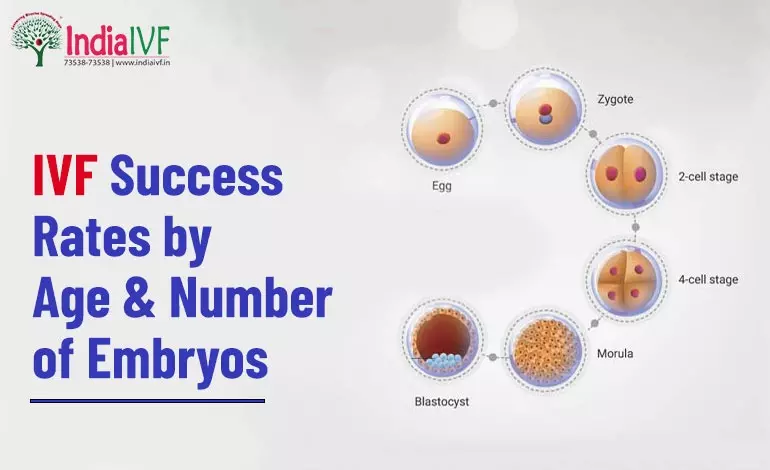
- Embryo Culturing: The fertilized eggs are monitored as they divide and develop into embryos.
- Embryo Transfer: Selected embryos are transferred into the woman’s uterus.
Why is IVF Recommended?
IVF is often recommended for couples who face difficulty in conceiving naturally. This could be due to several factors, including:
- Fallopian tube damage or blockage
- Ovulation disorders
- Endometriosis
- Uterine fibroids
- Previous tubal sterilization or removal
- Impaired sperm production or function
Who Needs IVF?
IVF is an effective option for couples facing fertility challenges, single women who desire to be mothers. It’s also an option for women who want to preserve their fertility ahead of medical treatments that might affect it, such as cancer treatments.
IVF Success Rate in India:
India has emerged as a go-to destination for IVF due to its high success rates, experienced practitioners, and cost-effective treatment plans. India IVF Fertility, with clinics in Delhi, Noida, Gurgaon and Ghaziabad, Srinagar boasts a commendable success rate of 40-50%, on par with international standards.
Factors Influencing IVF Success Rates
Several factors can impact the success of an IVF procedure. These include:
- Age of the woman
- Reproductive history
- The cause of infertility
- Lifestyle factors (smoking, obesity)
- Quality of the embryo
IVF Success Rates by Age:
Age plays a pivotal role in determining IVF success rates. Younger women generally have healthier eggs, which contributes to higher success rates.
IVF Success Rates at Age 28
At this age, women usually enjoy peak fertility, translating into a higher likelihood of IVF success. The success rate can be as high as 60%.
IVF Success Rate for 31-Year-Olds
Even at 31, the IVF success rate remains fairly high, with an average of 55%.
IVF Success Rates 35-37
The average success rate for women under 35 undergoing IVF treatment is approximately 50%.
IVF Success Rates Over 40
As women cross the age of 40, the quality and quantity of their eggs decrease, leading to a decline in IVF success rates. The average success rate after 40 drops to about 20%.
IVF Success Rates by Age (per embryo transfer) Table
| Age | Typical Success Per Transfer | Cumulative Over 3 Cycles | What Changes the Odds |
| Under 35 | 55–65% | 80–90% | Embryo quality, lab standards |
| 35–37 | 40–50% | 70–80% | AMH, blastocyst availability |
| 38–40 | 30–35% | 55–65% | Egg quality; PGT-A can help selection |
| 41–42 | 15–20% | 30–40% | Consider PGT-A; donor eggs raise odds sharply |
| 43+ (own eggs) | 5–10% | 10–20% | Donor-egg IVF: 50–60% per transfer at any age |
Does Paternal Age Affect Pregnancy & Baby’s Health?
While the impact of paternal age on IVF success isn’t as pronounced as maternal age, research suggests that men’s fertility begins to decline around age 40. This could potentially influence the health of the pregnancy and the baby.
Other Factors Impacting IVF Success Rates:
Some other factors impacting IVF success rates include:
- The overall health and lifestyle of both partners
- The quality of sperm
- The quality of the fertility clinic and expertise of the IVF specialists
What is Embryo Transfer?
Embryo transfer is the final step in the IVF process where one or more embryos are placed in the woman’s uterus in the hope that it will implant and lead to a successful pregnancy.
IVF Success Rate by Number of Embryos:
The number of embryos transferred can impact the success rate of IVF. However, transferring more embryos doesn’t always lead to higher success. It’s a delicate balance as transferring too many embryos can lead to multiple pregnancies, which carry higher risks.
The 6 Factors that Actually Decide Your IVF Success
Age matters most — egg quantity and quality decline from the mid-30s. Then ovarian reserve (AMH and antral follicle count), sperm health (DNA fragmentation, not just count), embryo quality (blastocyst-stage transfer improves selection), the uterus (lining thickness, polyps, fibroids — fixable when found early), and finally the lab itself. The same couple can have different outcomes in different labs; air quality, incubator stability and embryologist skill are invisible to patients but decisive. This is why India IVF Fertility runs ISO 9001:2015 labs with i-Womb intelligent monitoring and double witnessing on every sample.
How to Make IVF Successful the First Time
- Choose the Right Fertility Clinic: The expertise and experience of the fertility clinic play a pivotal role in the success of IVF. India IVF Fertility, with its state-of-the-art technology and expert team, offers an excellent success rate.
- Follow Your Doctor’s Advice: Adhere strictly to the medication and instructions provided by your doctor.
Why “success rate” Numbers Confuse Everyone
Here’s the honest truth: clinics can quote four different numbers and all of them are technically true. Pregnancy per cycle started, pregnancy per transfer, clinical pregnancy, and live birth are different things — and live birth per cycle started is always the lowest and most honest number. When you compare clinics, ask: “What is your live birth rate per embryo transfer for my age group?” If a clinic quotes one big number for all ages, be careful.
How India IVF Fertility improves the odds in hard cases
Our ESHRE-recognized research focuses on the two hardest groups: poor ovarian reserve and repeated IVF failure. Practically, that means individualized stimulation protocols rather than one-size-fits-all, blastocyst culture and laser-assisted hatching where indicated, ERA testing for implantation timing in repeated failure, and PGT-A for embryo selection in advanced age or recurrent miscarriage. If you’ve failed cycles elsewhere, see our Failed IVF Solutions programme.
How India IVF Fertility Can Help in Parenthood
India IVF Fertility has a track record of helping couples achieve their dream of parenthood. With advanced technologies, personalized care, and expert team, they’re well-positioned to make your IVF journey successful.
Conclusion
While IVF success rates can vary depending on factors like age and the number of embryos transferred, choosing a reputable and experienced fertility clinic like India IVF Fertility can greatly improve your chances. Remember, each journey is unique, and success in IVF is no exception.