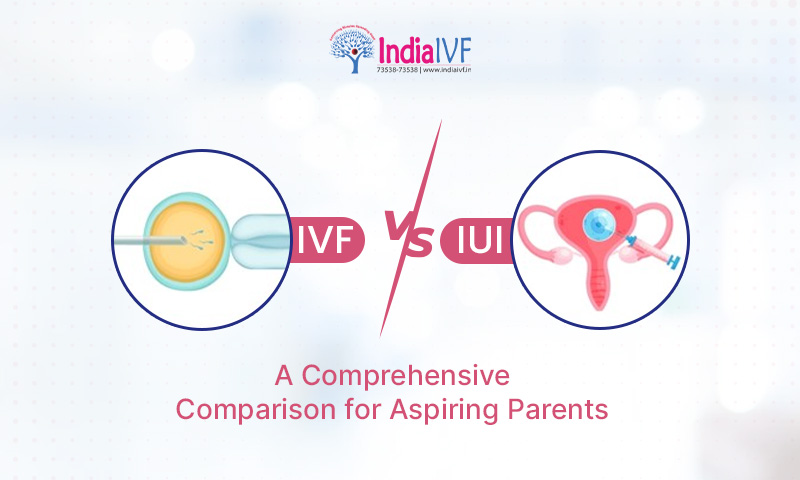
Understanding IVF and IUI
- IVF (In Vitro Fertilization): Lab-based fertilization of egg and sperm
- IUI (Intrauterine Insemination): Sperm placed directly in uterus
IVF vs IUI Success Rates
Overall Success Rates
- IVF: Higher success rate
- IUI: Lower success rate
Success Rates Over 35
- IVF: Better for women over 35
- IUI: Lower success rate for women over 35
Success Rates Over 40
- IVF: Still effective for women over 40
- IUI: Success rates decline significantly over 40
IVF vs IUI Cost Comparison
| Treatment | Cost |
|---|---|
| IVF | 135000-150000 |
| IUI | 10000-15000 |
IVF vs IUI vs ICSI
- ICSI (Intracytoplasmic Sperm Injection): Similar to IVF but with a single sperm injected into the egg
- Ideal for severe male infertility issues
When to Choose IVF or IUI
- IVF: Blocked fallopian tubes, severe male infertility, previous IUI failures
- IUI: Mild male infertility, unexplained infertility
IVF and IUI Full Forms
- IVF: In Vitro Fertilization
- IUI: Intrauterine Insemination
Are IUI and IVF the Same?
- Not the same: Different methods, success rates, and costs
IUI Process vs IVF
- IUI: Sperm preparation, insemination
- IVF: Ovary stimulation, egg retrieval, fertilization, embryo transfer
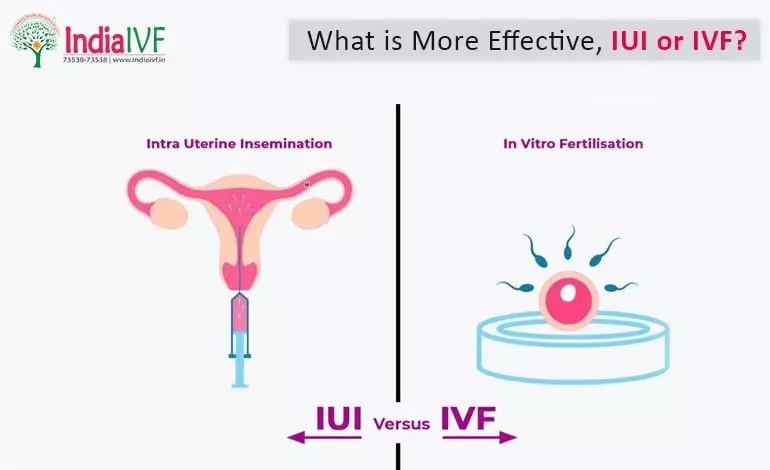
What is More Effective, IUI or IVF?
IVF (In Vitro Fertilization) is generally considered more effective than IUI (Intrauterine Insemination) for a variety of reasons, backed by technical factors and data:
01. Higher Success Rates:
IVF has overall higher success rates compared to IUI. The increased effectiveness of IVF can be attributed to the advanced techniques used, as well as the ability to select the best quality embryos for transfer.
02.Effectiveness in Older Women:
IVF remains relatively more effective for women over the age of 35 and 40.
03. Treatment for a Wider Range of Infertility Causes:
IVF is effective in addressing a broader range of infertility issues compared to IUI. These include blocked or damaged fallopian tubes, severe male infertility, endometriosis, and cases where previous IUI treatments have been unsuccessful.
04. IVF can also be combined with ICSI (Intracytoplasmic Sperm Injection) for cases of severe male infertility.
05. Embryo Quality Control:
With IVF, it’s possible to select the best quality embryos for transfer, increasing the likelihood of a successful pregnancy. In contrast, IUI doesn’t allow for any control over the quality of the fertilized eggs.
06. Preimplantation Genetic Testing:
IVF allows for Preimplantation Genetic Testing (PGT) to be performed on embryos before implantation. PGT helps identify chromosomal abnormalities or specific genetic disorders, increasing the chances of a successful pregnancy and healthy baby.
IVF vs IUI: Key Differences in Tabulated Form
| Factor | IVF | IUI |
|---|---|---|
| Full Form | In Vitro Fertilization | Intrauterine Insemination |
| Process | Ovary stimulation, egg retrieval, fertilization, embryo transfer | Sperm preparation, insemination |
| Success Rate | 55-75% | 10-20% |
| Success Rate Over 35 | 50-60% | 5-15% |
| Success Rate Over 40 | 40-50% | 2-5% |
| Cost (in INR) | ₹1,35,000 – ₹1,50,000 | ₹10,000 – ₹20,000 |
| Treatment Indications | Blocked fallopian tubes, severe male infertility, previous IUI failures | Mild male infertility, unexplained infertility |
| Additional Techniques | ICSI can be added for severe male infertility | N/A |
In conclusion, the choice between IVF and IUI depends on your unique circumstances, including age, medical history, and the cause of infertility. Consult with your doctor to determine the best treatment option for you.