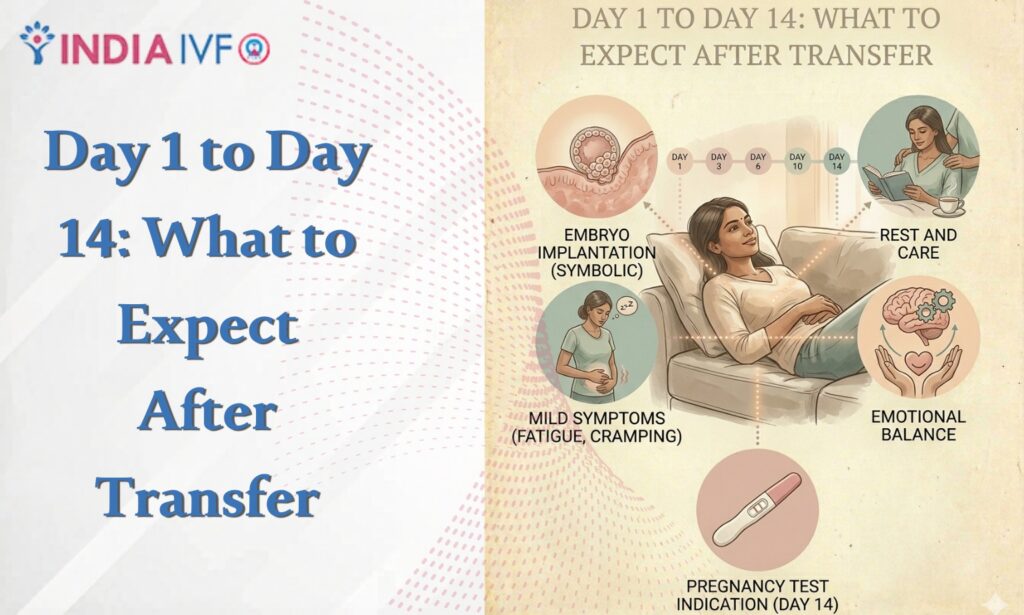
The journey of IVF is a rollercoaster of emotions, and the final stretch is perhaps the most nerve-wracking: the “Two Week Wait.” Once the embryo is placed back into the uterus, many parents-to-be find themselves searching for every small sign or symptom. Knowing what happens day by day after embryo transfer can help ease your anxiety and help you understand the biological miracle happening inside your body. In this guide, we will walk you through the entire post-transfer journey, explaining the embryo implantation timeline and what you should expect during the 2 week wait.
Understanding the Two-Week Wait
The period between the embryo transfer and the final pregnancy test is commonly known as the 2 week wait. During this time, your body is working hard to allow the embryo to attach to the uterine lining. While it is tempting to take a home pregnancy test early, it is important to follow the day by day after embryo transfer timeline to ensure the results are accurate.
Day 1: The Day of Transfer
On the first day of your day by day after embryo transfer journey, the embryo (usually a Day 5 blastocyst) is placed into the uterus. At this stage, the embryo is still “free-floating.” You might feel a bit of cramping or mild discomfort from the procedure, but physically, the embryo is simply getting settled into its new environment.
Day 2: The Hatching Process
In the embryo implantation timeline, Day 2 is critical. The blastocyst begins to “hatch” out of its protective shell, known as the zona pellucida. This is a necessary step because the embryo must be “naked” to properly attach to the uterine wall.
Day 3: Preparation for Attachment
As we progress day by day after embryo transfer, the hatched embryo begins to move toward the uterine lining (endometrium). It starts looking for the perfect spot to settle down. This is the “apposition” phase.
Day 4: The Start of Implantation
This is one of the most vital days in your post-transfer journey. The embryo begins to attach itself deeply into the endometrium. You may not feel anything yet, but microscopically, the connection is forming.
Day 5: Deep Implantation
On Day 5 of the day by day after embryo transfer schedule, the embryo continues to bury itself deeper into the uterine lining. This is where the blood supply from the mother begins to link with the embryo.
Day 6: Completion of Implantation
By now, the embryo is fully implanted. The cells that will eventually become the placenta and the fetus are starting to differentiate.
Day 7: hCG Production Begins
The “pregnancy hormone,” known as human Chorionic Gonadotropin (hCG), starts being produced by the newly formed placenta cells. While it’s being produced, it’s usually still too low to be detected by a home test.
Day 8: hCG Enters the Bloodstream
As you continue your day by day after embryo transfer wait, the hCG levels continue to rise and enter the mother’s bloodstream.
Day 9 to 11: Rapid Hormonal Increase
During these days of the 2 week wait, your hCG levels are doubling approximately every 48 hours. You might start feeling symptoms like breast tenderness, mild nausea, or fatigue.
Day 12 to 13: High Hormone Levels
The levels of hCG are now likely high enough to be detected in the blood, though urine tests might still show a “faint line” depending on their sensitivity.
Day 14: The Official Pregnancy Test
Finally, the end of the day by day after embryo transfer timeline. Your clinic will likely schedule a Beta-hCG blood test today. This is the most accurate way to confirm if the post-transfer journey has resulted in a successful pregnancy.
Detailed Symptoms to Watch For During the 2 Week Wait
While following the day by day after embryo transfer timeline, you will likely experience various physical sensations. It is important to remember that many of these symptoms are caused by the progesterone supplements you are taking, not necessarily the pregnancy itself.
- Implantation Bleeding: This usually occurs around Day 4 to Day 7. It is light spotting, usually pinkish or brownish, and is a sign the embryo is burrowing into the lining.
- Cramping: Mild pelvic cramping is common in the embryo implantation timeline. If the cramps are severe, contact your doctor.
- Breast Tenderness: Due to high levels of progesterone and estrogen, your breasts may feel swollen or sore.
- Fatigue: Growing a human takes a lot of energy! You may feel more tired than usual during the 2 week wait.
- Frequent Urination: As hCG levels rise, blood flow to the pelvic area increases, making you run to the bathroom more often.
Risks and Precautions During the Post-Transfer Journey
While the day by day after embryo transfer process is mostly a waiting game, there are certain risks and utilities to keep in mind.
Potential Risks:
- Ovarian Hyperstimulation Syndrome (OHSS): If you had a fresh transfer, your ovaries might still be swollen. Symptoms include severe bloating, pain, and nausea.
- Ectopic Pregnancy: Although rare in IVF, the embryo can sometimes migrate to the fallopian tubes.
- Failed Implantation: Unfortunately, not every transfer leads to pregnancy. This is often due to chromosomal issues with the embryo rather than anything the mother did.
Utility and Care Tips:
- Rest, but stay active: You don’t need bed rest, but avoid heavy lifting or high-impact exercise.
- Healthy Diet: Focus on whole foods, proteins, and plenty of water.
- Avoid Heat: Do not use hot tubs, saunas, or heating pads on your abdomen, as high core temperatures can interfere with the embryo implantation timeline.
Cost Analysis of Embryo Transfer and Follow-ups
Understanding the financial aspect of the post-transfer journey is essential for planning.
| Service Category | Estimated Cost (INR) | |
| Frozen Embryo Transfer (FET) | ₹50,000 – ₹1,50,000 | |
| Progesterone & Estrogen Meds | ₹10,000 – ₹25,000 | |
| Beta-hCG Blood Test | ₹1,500 – ₹3,500 | |
| Initial Ultrasound (Post-Positive) | ₹5,000 – ₹10,000 |
Note: Costs vary significantly based on the clinic and country.
Summary of the Embryo Implantation Timeline
To help you track your day by day after embryo transfer, here is a quick summary table:
| Day Post Transfer | Biological Event |
| Day 1 | Embryo settles in the uterus. |
| Day 2 | Blastocyst hatches. |
| Day 3 | Embryo attaches to the uterine wall. |
| Day 4-5 | Implantation begins and goes deeper. |
| Day 6 | Implantation is complete. |
| Day 7-8 | hCG starts entering the blood. |
| Day 9-13 | hCG levels rise significantly. |
| Day 14 | Official Pregnancy Test Day. |
Managing Your Mental Health During the 2 Week Wait
The day by day after embryo transfer process is as much a mental challenge as a physical one. Here are some tips to stay sane:
- Limit Google Searches: Every body is different; what worked for someone else might not apply to you.
- Stay Busy: Plan “low-stakes” activities like watching a new series or reading a book.
- Talk to Your Partner: Share your fears and hopes to strengthen your bond during the post-transfer journey.
Conclusion
The day by day after embryo transfer journey is a time of great hope and anticipation. By understanding the embryo implantation timeline, you can navigate the 2 week wait with more confidence and less stress. Remember to take your medications exactly as prescribed and reach out to your medical team with any concerns. Your post-transfer journey is a unique experience—be kind to yourself during these fourteen days.
Ready to start your journey or need expert advice?
Contact Our Best Fertility Specialists Today for a Personalized Consultation