Introduction
If you’re diving into the world of fertility treatments, you’ve likely heard about ICSI (Intracytoplasmic Sperm Injection) and IVF (In Vitro Fertilization). But here’s a burning question— Can ICSI be done without IVF? Let’s cut to the chase and explore this topic in simple terms.
Understanding ICSI and IVF
ICSI is a specialized form of fertility treatment where a single sperm is injected directly into an egg. This technique is typically used when there are severe male infertility issues, like low sperm count or poor sperm motility.
IVF, on the other hand, involves combining eggs and sperm outside the body to create an embryo, which is then transferred to the uterus. ICSI is often used as part of the IVF process to improve the chances of fertilization, especially in cases of male infertility.
Can ICSI Be Done Without IVF?
The short answer is no. Here’s why:
- ICSI is a part of the IVF process: To perform ICSI, eggs and sperm need to be collected. This requires the same initial steps as IVF, including ovarian stimulation, egg retrieval, and sperm collection.
- No fertilization outside IVF: Since ICSI involves injecting sperm directly into an egg, the egg must be outside the body, which is the core of the IVF process.
- ICSI enhances IVF success: ICSI is designed to overcome certain obstacles in fertilization. Without the rest of the IVF process, there’s no way to fertilize the egg and develop an embryo.
Why ICSI and IVF Go Hand-in-Hand
- Male infertility: ICSI is a game-changer for couples facing male infertility, ensuring that even sperm with poor motility can fertilize an egg.
- Increased fertilization rates: By combining ICSI with IVF, clinics can increase the chances of fertilization, leading to higher success rates.
- Better control over fertilization: ICSI allows doctors to select the best sperm, giving more control over the fertilization process compared to natural fertilization or traditional IVF.
Steps Involved in ICSI and IVF
1. Ovarian Stimulation: Women take medications to stimulate the ovaries to produce multiple eggs.
2. Egg Retrieval: Eggs are collected from the ovaries using a minor surgical procedure.
3. Sperm Collection: Sperm is collected, either naturally or surgically, from the male partner or donor.
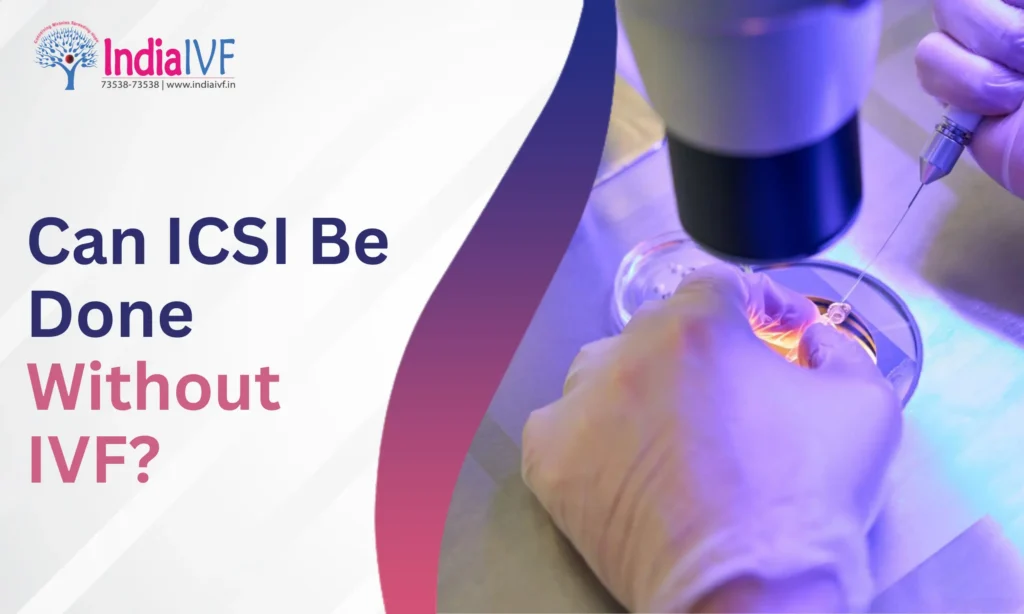
4. ICSI Procedure: A single sperm is injected directly into each mature egg.
5. Embryo Culture: The fertilized eggs are monitored in a lab to develop into embryos.
6. Embryo Transfer: The best embryo(s) are transferred to the woman’s uterus for implantation and pregnancy.
The Role of ICSI in IVF Success
- Improving Chances: ICSI significantly improves the chances of fertilization, especially in cases of severe male infertility.
- Overcoming Barriers: Even in cases where previous IVF cycles have failed, ICSI offers hope by directly addressing fertilization issues.
Conclusion
In the world of fertility treatments, ICSI and IVF are like peanut butter and jelly—they go hand-in-hand. You can’t have one without the other. ICSI cannot be done without IVF because it’s a crucial part of the IVF process that directly addresses fertilization issues, particularly in cases of male infertility. If you’re considering ICSI, it’s essential to understand its role in the broader context of IVF. At India IVF Fertility, we combine these techniques to offer you the best chances of success on your fertility journey.