Introduction
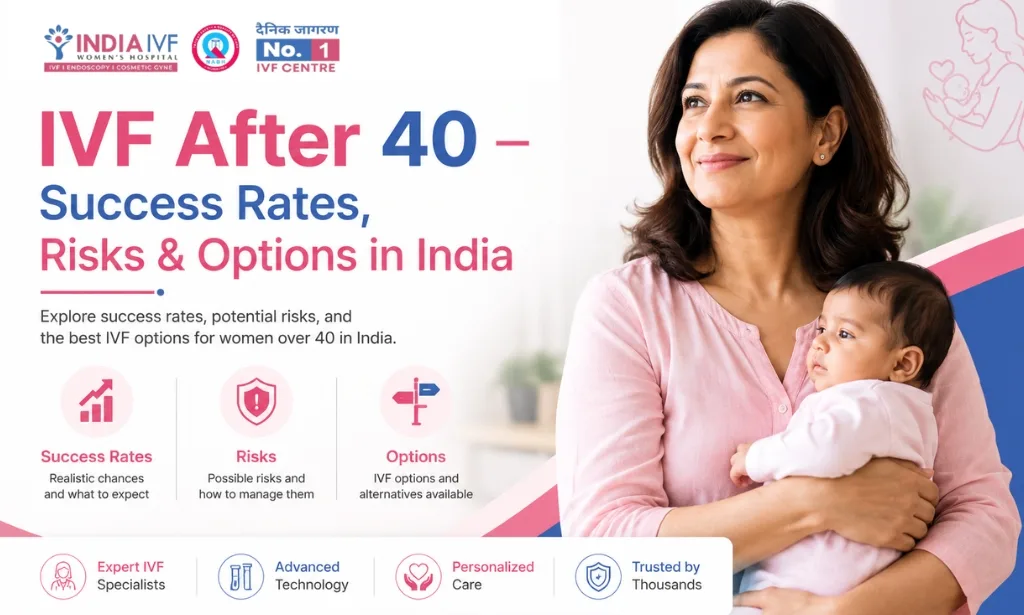
Becoming a mother is a dream for many women, and in today’s fast-paced world, many women are choosing to start their families later in life. If you are wondering about the IVF after 40 success rate, you are not alone. Many women in India are successfully welcoming babies after the age of 40. While the journey might have its challenges, modern medical technology has made it much more achievable. In this guide, we will break down everything you need to know about pregnancy after 40, the risks involved, and the options available in India.
What is IVF and How Does It Work After 40?
In-Vitro Fertilization (IVF) is a process where an egg is combined with sperm outside the body in a laboratory. For women over 40, the process remains largely the same, but the focus shifts to egg quality and hormonal support.
Understanding the IVF After 40 Success Rate
It is important to be realistic. The IVF after 40 success rate naturally declines because the number and quality of eggs in the ovaries decrease as a woman ages.
- Ages 40-42: Success rates generally range between 30% to 50% per cycle.
- Ages 43-45: The success rate may drop below 20-40% using self-eggs.
- Using Donor Eggs: If a woman uses donor eggs, the success rate increases significantly, often reaching 50% or more, regardless of the woman’s age.
Factors Affecting Your Chances of Success
- Egg Quality: This is the most critical factor.
- Ovarian Reserve: The number of eggs remaining in your ovaries.
- General Health: Conditions like thyroid, diabetes, or blood pressure can affect outcomes.
- Lifestyle: Smoking, alcohol, and stress levels play a major role.
Potential Risks and Challenges
While IVF is a miracle treatment, it is important to be aware of the potential risks when undergoing IVF after 40 success Rate:
- Higher Miscarriage Rates: Chromosomal abnormalities in eggs are more common after 40.
- Multiple Pregnancies: IVF can sometimes lead to twins or triplets, which carries higher risks for both mother and baby.
- Gestational Diabetes and Preeclampsia: These are more common in pregnancies over 40.
Available Options in India
India has become a global hub for fertility treatments. Here are the options for women over 40:
- IVF with Self-Eggs: Recommended if the ovarian reserve is healthy.
- IVF with Donor Eggs: A highly successful option for women with low egg quality.
- Preimplantation Genetic Testing (PGT): Testing embryos for chromosomal issues before implantation to improve success rates.
- Oocyte Freezing: If you are in your late 30s, freezing eggs is the best preemptive strategy.
Read Related Blog: What is IVF Baby & Process of IVF Baby
Lifestyle Tips to Improve IVF Outcomes
Before starting your IVF journey, focus on:
- A Balanced Diet: Include antioxidants, folic acid, and vitamin D.
- Regular Exercise: Keeps your body ready for pregnancy.
- Managing Stress: Yoga and meditation help in keeping hormonal balance.
- Avoiding Toxins: Completely stop smoking and limit caffeine.
Choosing the Right Fertility Clinic in India
When searching for the best clinic, consider:
- Success stories of patients over 40.
- Experience of the fertility specialists.
- Advanced laboratory technology.
- Transparency in pricing and processes.
Call-to-Action (CTA)
Are you ready to take the next step towards motherhood? Don’t let age stop your dream. Schedule a consultation with our fertility experts today to discuss your personalized fertility roadmap and improve your chances of a healthy pregnancy. [Book Your Consultation Now]
Sources:
ASRM (American Society for Reproductive Medicine): Reproductive Facts – IVF Success Rates
ISAR (Indian Society for Assisted Reproduction): ISAR India Official Website